UV Air Purifier for HVAC: Complete 2025 Guide to Cleaner Indoor Air
A UV air purifier for HVAC systems uses ultraviolet light to kill airborne pathogens like bacteria, viruses, and mold spores before they circulate through your home. Studies show indoor air can be up to five times more polluted than outdoor air, and properly installed UV-C systems reduce airborne microorganisms by over 90%. This guide covers how UV technology works, installation options, costs, and what these systems can eliminate.
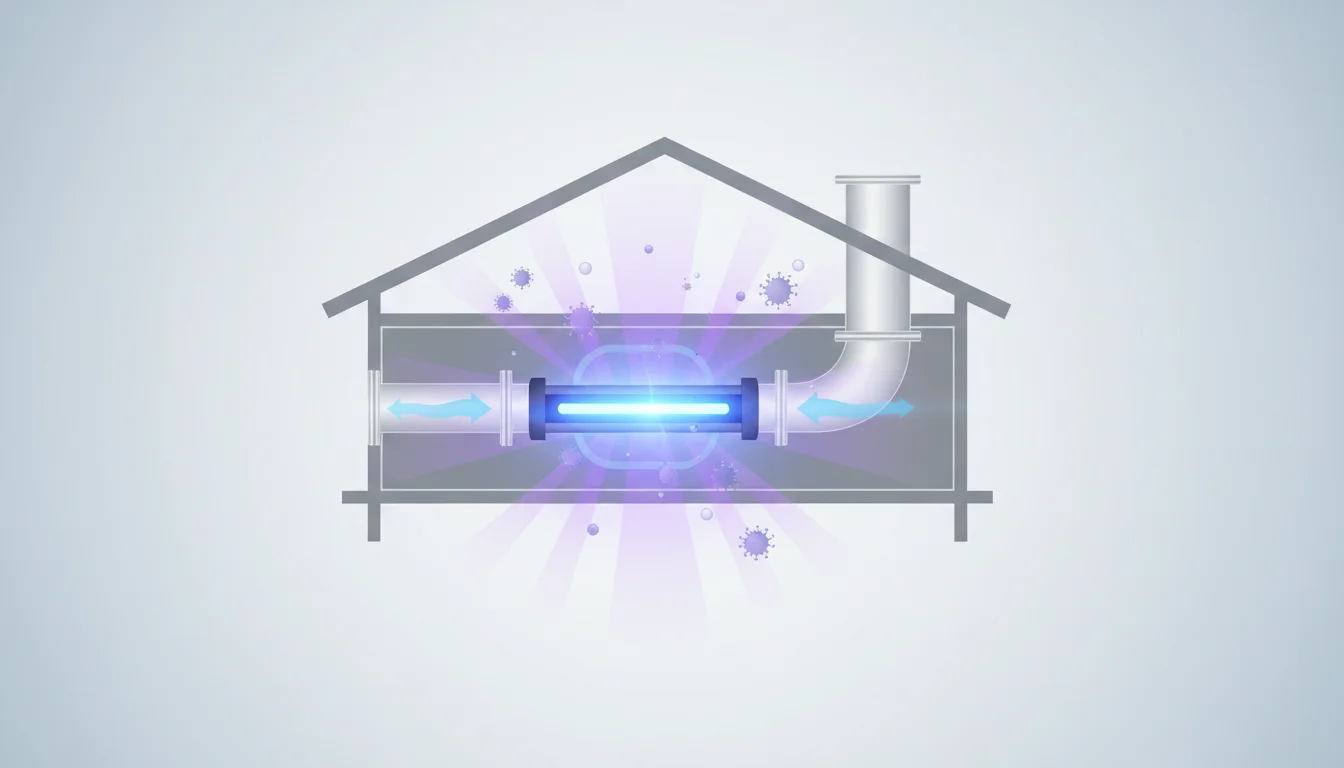
What Is a UV Air Purifier and How Does It Work in HVAC Systems?
UV-C light at 254 nanometers damages the DNA and RNA of microorganisms, preventing them from reproducing or surviving as air passes through your HVAC system.
This germicidal wavelength carries enough energy to form thymine dimers in microbial genetic material. The photochemical reaction destroys each pathogen's ability to replicate. The 254nm wavelength maximizes germicidal effectiveness while avoiding ozone production.
Two primary installation methods exist:
- In-duct systems: UV lamps mounted inside ductwork irradiate air as it flows past, neutralizing suspended pathogens before distribution throughout your home
- Coil-mounted systems: Lamps shine directly on evaporator coils and drain pans, preventing mold growth on these perpetually damp surfaces
Both approaches work alongside traditional filters. Pre-filters remove dust and debris so UV light reaches microorganisms unobstructed, while the UV-C handles biological contaminants that pass through mechanical filtration.
Research from Duke University confirms UVGI systems reduce molds, bacteria, and viruses by up to 97%. Influenza viruses show over 99% deactivation rates with proper exposure time. [Parker and Sons] notes these systems also improve HVAC efficiency by preventing microbial buildup that impedes airflow.
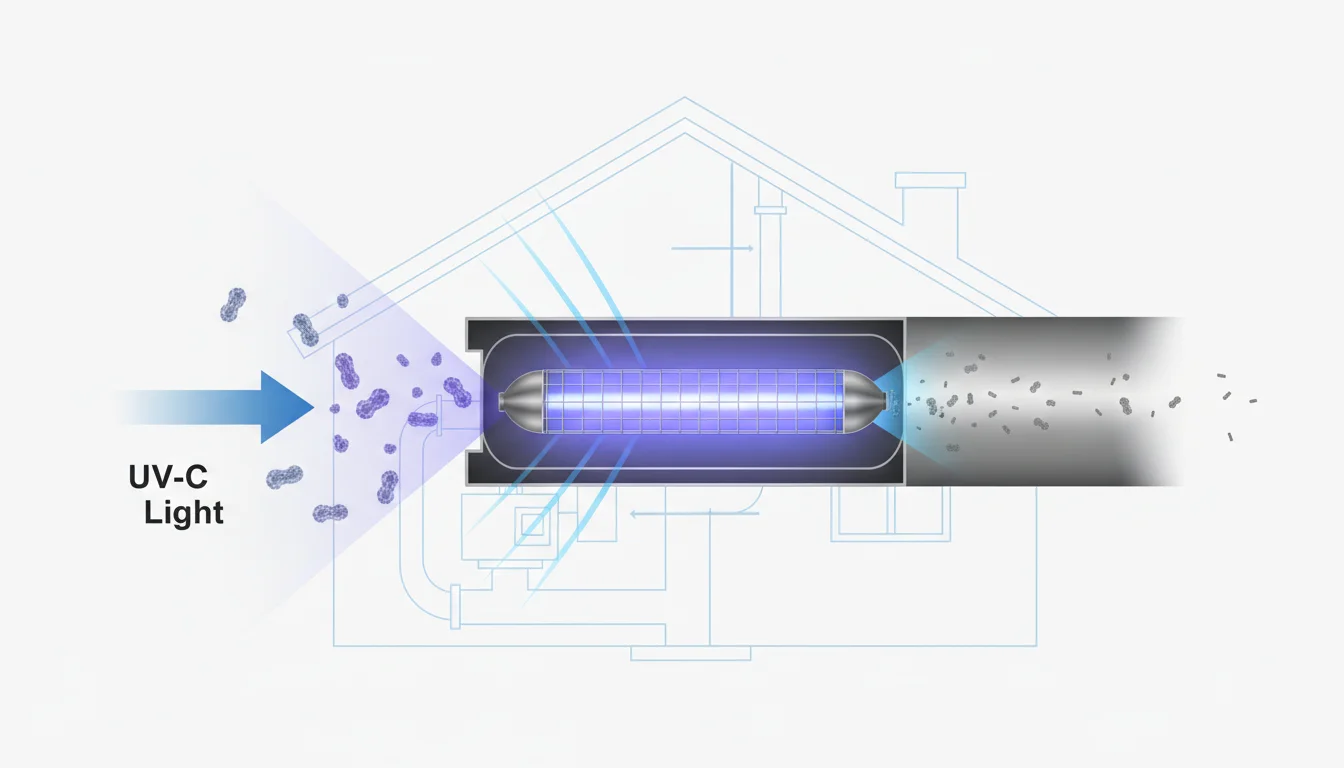
Types of UV Air Purifiers for HVAC: Coil Cleaners vs Air Sterilizers
Three distinct UV system types serve different purposes: coil sterilizers target surface growth, in-duct units treat circulating air, and whole-house systems combine both approaches.
| Type | Location | Primary Function | Best For | Typical Cost |
|---|---|---|---|---|
| Coil Sterilization | Near evaporator coils | Prevents mold growth on surfaces | Humid climates, musty odors | $100-$300 |
| In-Duct Air Sterilizer | Return air ducts | Kills airborne pathogens | Allergy sufferers, immune concerns | $200-$500 |
| Whole-House UV System | Multiple HVAC locations | Comprehensive air and surface treatment | Maximum protection | $500-$1,500+ |
Coil units run continuously, bathing damp surfaces in germicidal light. In-duct sterilizers need sufficient exposure time as air moves past the lamps. Whole-house systems often integrate HEPA or activated carbon filters for complete coverage.
Your climate matters here. Homes in Florida or Houston benefit more from coil units because humidity creates constant mold pressure. Dry climates get more value from in-duct air treatment targeting seasonal viruses.
Health Benefits: What UV HVAC Purifiers Can (and Can't) Eliminate
UV-C technology excels at destroying living pathogens but does nothing for non-biological contaminants like dust, pet dander, or chemical fumes.
What UV systems effectively neutralize:
- Bacteria, including antibiotic-resistant strains
- Viruses like influenza and coronavirus variants
- Mold spores and fungal growth
- Airborne allergens with biological components
What UV systems cannot address:
- Particulate matter (dust, pollen, pet hair)
- Volatile organic compounds (paint fumes, cleaning chemicals)
- Smoke and combustion byproducts
- Odors from non-biological sources
The smartest approach pairs UV-C with HEPA filtration. [Gator AC Repair] describes this as a "double-barrier" effect that captures particles while neutralizing biological threats. HEPA traps 99.97% of particles at 0.3 microns, and UV kills what gets through.
One important consideration: some UV devices produce trace ozone. Quality systems use 254nm lamps specifically because this wavelength avoids ozone formation. Check manufacturer specifications before buying.
Installation Options: DIY vs Professional HVAC UV System Setup
Professional installation runs $150-$500 for labor and ensures proper lamp positioning, electrical connections, and airflow optimization—factors that directly impact effectiveness.
Critical installation factors:
- Lamp placement relative to airflow direction
- Distance from coils or duct surfaces
- Power supply integration with HVAC controls
- Sufficient exposure time based on air velocity
- Access for annual bulb replacement
DIY kits exist for $100-$300 and include mounting hardware and wiring instructions. They work well for handy homeowners comfortable with basic electrical work and HVAC access.
Here's what matters most: placement determines everything. A lamp positioned where air velocity is too high provides insufficient exposure time. One mounted too close to coils wastes UV energy on surfaces that are already clean. Professionals use airflow measurements and manufacturer guidelines to optimize positioning.
[Lincoln Tech] emphasizes that effectiveness depends heavily on humidity, temperature, and exposure duration. Getting these variables wrong means paying for equipment that underperforms.
Cost Analysis: Initial Investment, Maintenance, and Long-Term Savings
Expect to spend $250-$1,500 upfront depending on system type, plus $30-$100 annually for replacement bulbs and $10-$50 for electricity.
| Cost Category | Low End | High End | Frequency |
|---|---|---|---|
| Basic coil unit | $100 | $300 | One-time |
| In-duct sterilizer | $200 | $500 | One-time |
| Whole-house system | $500 | $1,500+ | One-time |
| Professional installation | $150 | $500 | One-time |
| Replacement UV bulbs | $30 | $100 | Every 12-24 months |
| Added electricity | $10 | $50 | Annual |
The hidden payoff comes from HVAC efficiency gains. Clean coils improve heat transfer by up to 35%, reducing cooling costs. Fewer coil cleanings save $100-$200 per service call. Extended equipment life delays replacement costs of $5,000 or more.
Most UV bulbs lose germicidal effectiveness after 9,000-12,000 hours of operation, which translates to annual replacement for systems running continuously. Budget accordingly.
UV-C vs Other HVAC Air Purification Technologies Compared
UV-C kills pathogens through DNA damage, while other technologies trap particles or absorb chemicals. No single method handles everything.
| Technology | Targets | Mechanism | Limitations |
|---|---|---|---|
| UV-C Light | Bacteria, viruses, mold | DNA/RNA destruction | No particle capture |
| HEPA Filters | Particles 0.3+ microns | Physical trapping | Doesn't kill captured pathogens |
| Electrostatic Filters | Charged particles | Electrical attraction | Requires frequent cleaning |
| Activated Carbon | VOCs, odors, gases | Adsorption | No pathogen elimination |
A combination approach works best. HEPA captures particles while UV kills biological agents. Activated carbon handles chemical odors. Each technology fills gaps the others miss.
Spending $300 on UV alone provides less value than spending $150 on UV plus $150 on quality filtration upgrades. Layered systems outperform single-technology solutions every time.
FAQ
Do HVAC UV lights produce harmful ozone?
Quality UV-C lamps operating at 254nm produce negligible ozone. Avoid cheaper 185nm lamps marketed as "ozone generators," since these create respiratory irritants. Check product specifications before purchasing.
How long do UV bulbs last in HVAC systems?
Most manufacturers recommend replacement every 12-24 months, equivalent to 9,000-12,000 operating hours. Bulbs continue glowing after losing germicidal effectiveness, so replacement schedules matter more than visual inspection.
Will UV light damage HVAC components?
Prolonged UV exposure can degrade certain plastics and rubber seals. Quality systems include shielding to protect vulnerable components. Professional installers position lamps to avoid direct exposure to flexible ductwork or drain pan materials.
Do UV air purifiers work against COVID-19?
Laboratory studies confirm UV-C at 254nm inactivates SARS-CoV-2. Real-world HVAC effectiveness depends on exposure time and proper installation. UV systems add protection but should complement ventilation and filtration rather than replace them.
Can I install UV lights in any HVAC system?
Most forced-air systems accommodate UV installation. Mini-splits, radiant heating, and ductless systems require portable UV purifiers instead. Check available space near coils or in ductwork before purchasing integrated systems.
How do I know if my UV HVAC system is working?
Many units include indicator lights showing lamp operation. Annual bulb replacement maintains effectiveness, since output decreases over time. Some systems offer UV intensity monitors for precise performance tracking.
Are UV air purifiers worth the investment for allergies?
UV systems reduce mold spores and airborne allergens with biological components. Dust, pollen, and pet dander require mechanical filtration. Allergy sufferers benefit most from combining UV with HEPA filters for comprehensive relief.
Share this post
Related Posts
Air Purifier With Window Open: Does It Work? (2025 Guide)
Air Purifier With Window Open: Does It Work? (2025 Guide)
Air Purifiers for Cigarette Smoke: What Actually Works (2025 Guide)
Air Purifiers for Cigarette Smoke: What Actually Works (2025 Guide)
Air Purifier Ionizers: Good or Bad? The Science-Backed Verdict for 2025
Air Purifier Ionizers: Good or Bad? The Science-Backed Verdict for 2025