Air Purifier Ionizers: Good or Bad? The Science-Backed Verdict for 2025
Ionizer air purifiers use high-voltage electrical currents to release negative ions that charge airborne particles, causing them to settle on surfaces. A 2024 PMC study found ionizers reduced airborne virus concentrations by approximately 82%, but a 2021 study in Building and Environment revealed they can increase harmful VOCs like formaldehyde and toluene. This guide breaks down whether an air purifier ionizer is good or bad for your situation based on current scientific evidence.
How Do Ionizer Air Purifiers Work?
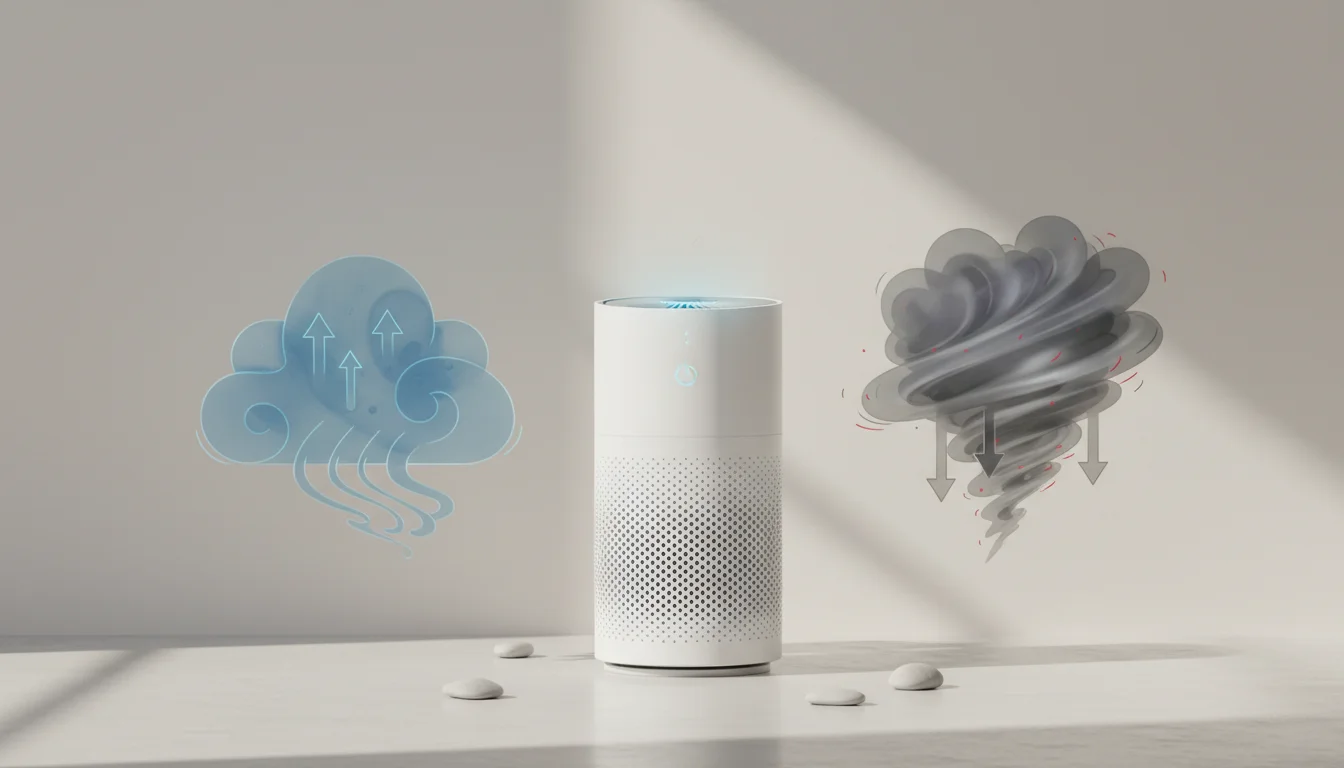
Negative ion purifiers release electrically charged particles through corona discharge. These ions attach to dust, pollen, smoke, and allergens floating in your air. Once charged, the particles become heavier, cluster together, and fall onto walls, floors, and furniture.
Here's the critical distinction: unlike HEPA filters that trap particles inside filter media, ionizer air purifiers displace contaminants rather than remove them. Those particles sitting on your couch? One disturbance sends them airborne again.
| Feature | Ionizer | HEPA Filter |
|---|---|---|
| Particle Removal Method | Settles to surfaces | Physically captures |
| Requires Filter Replacement | No | Yes |
| Particles Truly Removed | No | Yes |
| Produces Byproducts | Often ozone | None |
| Noise Level | Very quiet | Moderate |
Some ionizers include collection plates with positive charges to attract settled particles. Most don't. The ones without plates essentially turn your furniture into the filter. According to EPA guidance, the corona discharge process that generates ions also produces ozone as a byproduct in many units.
The Ozone Problem: Health Risks of Ionizer Air Purifiers
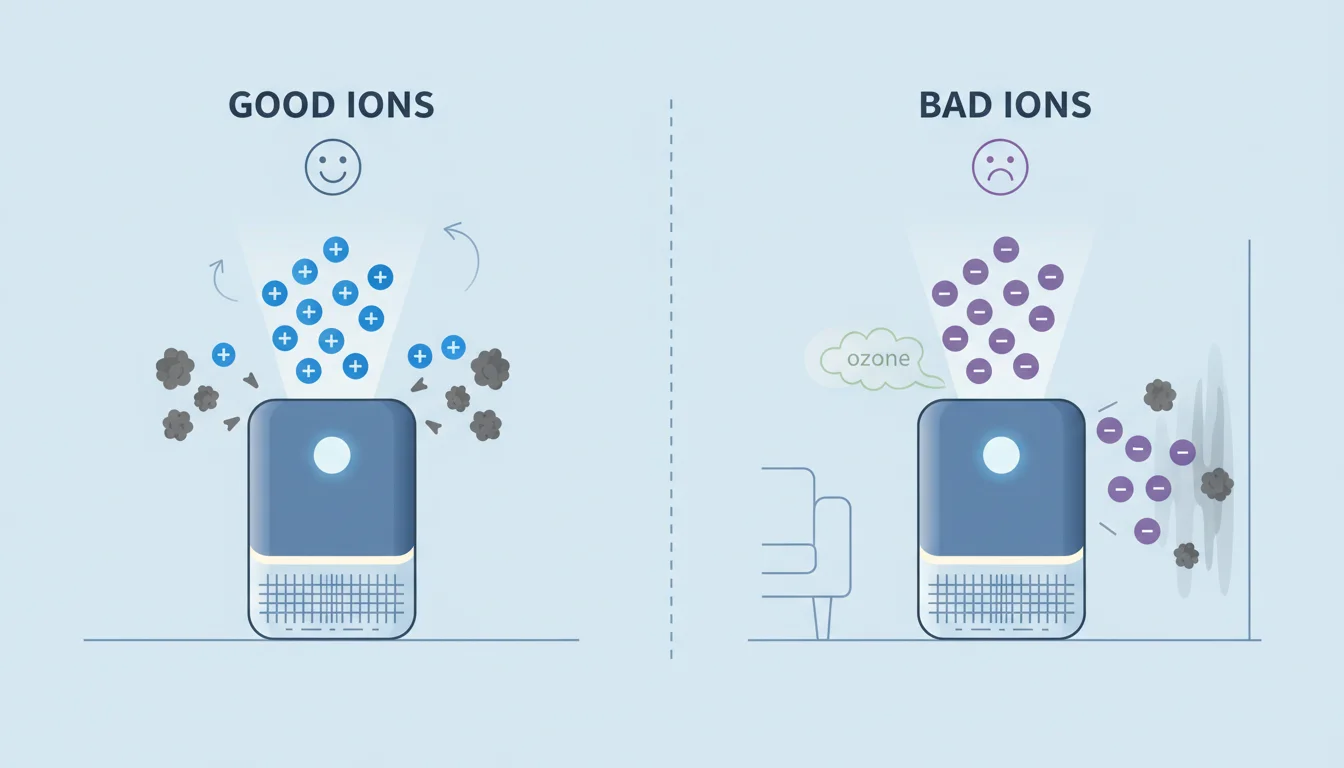
Ozone production poses the most significant health concern with ionizer technology. Ozone irritates lung tissue even at concentrations below the smell threshold.
The EPA warns that ozone exposure triggers asthma attacks, reduces lung function, and causes chest pain. Air ionizer side effects include coughing, throat irritation, and difficulty breathing. Children, elderly individuals, and anyone with respiratory conditions face the highest risk.
California's Air Resources Board now requires all air cleaners sold in the state to emit less than 0.050 ppm of ozone. Many ionizers fail this test.
- Ozone damages lung tissue at concentrations as low as 0.08 ppm
- Symptoms appear within 1-3 hours of exposure
- Effects worsen with exercise or physical activity
- Damage accumulates over time with repeated exposure
- No safe level exists for individuals with asthma or COPD
A 2021 study reported by Phys.org found ionizers increased acetone, ethanol, and toluene levels while decreasing others. The net effect on air quality: minimal at best, harmful at worst. Air ionizer health risks extend beyond ozone to include these secondary chemical byproducts.
Are Ionizers Actually Effective at Cleaning Air?
Scientific testing shows ionizers achieve 60-80% first-pass efficiency compared to HEPA's 99.97%. Particles settle on surfaces rather than leaving your breathing space entirely.
Dr. Brent Stephens from Illinois Institute of Technology tested ionizer effectiveness and concluded: "We showed that it just wasn't very effective." His team measured PM2.5 levels—the most reliable air quality indicator—and found minimal meaningful change. The IIT study also warned about "weird fragments" and chemical byproducts with unknown health effects.
Are air ionizers safe and effective? The evidence suggests neither claim holds up under scrutiny.
- Ionizers cannot remove gases, VOCs, or odors
- Settled particles become airborne again when disturbed
- No standardized testing method exists for ionizer claims
- Real-world performance falls short of lab conditions
- Larger particles like pollen respond poorly to ionization
The 2024 PMC virus reduction study used controlled laboratory conditions. Your living room doesn't match those parameters. The gap between marketing claims and measured results frustrates everyone who has tested these devices objectively.
Ionizer vs HEPA Filter: Which Is Better?
HEPA filters capture 99.97% of particles 0.3 microns and larger on the first pass. They produce zero harmful byproducts and receive endorsements from the EPA, allergists, and pulmonologists.
| Performance Metric | HEPA Filter | Ionizer |
|---|---|---|
| First-Pass Efficiency | 87-99% | 60-80% |
| Particle Capture Rate | 99.97% | Moderate |
| Smallest Particles | 0.3 microns | Ineffective on smallest |
| Large Particles (pollen) | Excellent | Poor |
| Ozone Production | None | Common |
| Health Benefits Proven | Yes | No |
The ionizer vs HEPA filter comparison ends quickly when health matters. Oransi's analysis confirms ionizers struggle with larger allergens like pollen and pet dander—the exact particles triggering most respiratory symptoms.
Looking for the best air purifier without ionizer features? HEPA models from AHAM-verified manufacturers deliver consistent results. Some combination units include both technologies. If you own one, keep the ionizer switched off and rely on the HEPA filtration alone.
When Ionizers Might Be Appropriate (Despite the Risks)
Units certified to California ARB standards produce ozone below 0.050 ppm, making them safer than unregulated alternatives. Verification matters here.
Are air ionizers safe in specific situations? Possibly, but only with strict conditions:
- CARB-certified units only
- Large commercial spaces where HEPA alone struggles
- Supplemental use alongside primary HEPA filtration
- Bedrooms where quiet operation matters (ionizer-off mode preferred)
- Spaces without children, pets, or respiratory-compromised individuals
Never use ionizers as your primary air cleaning method. The negative ion purifier dangers outweigh benefits for most residential applications. Fair warning: "low ozone" still means some ozone, and cumulative exposure adds up.
Check certification labels before purchasing. Manufacturers sometimes claim compliance without third-party verification. The California Air Resources Board maintains a searchable database of certified devices.
Safer Alternatives to Ionizer Air Purifiers
True HEPA filtration remains the gold standard for particle removal. Activated carbon filters handle gases, odors, and VOCs that HEPA cannot address.
The best air purifier without ionizer technology combines multiple proven methods:
- True HEPA filters: 99.97% particle capture, zero byproducts
- Activated carbon: Removes gases, smoke, and chemical odors
- UV-C purifiers: Neutralizes pathogens without ozone concerns
- Combination units: HEPA plus carbon for comprehensive cleaning
- AHAM Verified models: Third-party tested performance claims
The ionizer vs HEPA filter debate has a clear winner for health-conscious buyers. HouseFresh research confirms HEPA technology provides proven respiratory benefits, including reduced allergy symptoms, improved lung function, and better cardiovascular health markers.
Look for AHAM Verified certification on any air purifier purchase. This ensures the Clean Air Delivery Rate (CADR) listed on the box matches real-world performance.
FAQ
Do ionizers help with allergies?
Air ionizers are not recommended for allergy relief according to air quality experts. HEPA filters capture 99.97% of allergens, while ionizers merely displace them to surfaces where disturbance re-suspends them.
How do I know if my ionizer produces ozone?
Check for California Air Resources Board (CARB) certification on the packaging or manufacturer website. Units without this certification likely exceed the 0.050 ppm ozone safety threshold established for indoor air cleaners.
Can I use an ionizer with my HEPA air purifier?
Many combination units include both technologies. For safety, operate in HEPA-only mode with the ionizer disabled. The HEPA filter alone provides 99.97% particle capture without ozone exposure risk.
Are negative ions harmful to breathe?
Negative ions themselves appear safe. The concern lies with ozone and chemical byproducts created during the ionization process, particularly through the corona discharge methods used in most consumer ionizers.
How often should ionizer collection plates be cleaned?
Electrostatic precipitator plates require weekly cleaning for optimal performance. Efficiency drops significantly as particle buildup accumulates, unlike HEPA filters that maintain consistent filtration between replacements.
Do ionizers remove COVID-19 or other viruses?
A 2024 PMC study showed 82% reduction in one virus type under laboratory conditions. Researchers noted more study is needed for influenza and SARS-CoV-2. Real-world effectiveness remains unproven.
What air purifier do doctors recommend?
Allergists and pulmonologists consistently recommend True HEPA air purifiers. The EPA, American Lung Association, and medical professionals endorse mechanical filtration over electronic air cleaning technologies.
Are ionizers worth the lower operating cost?
The savings from no filter replacements disappear when weighing health risks and inferior performance. HEPA filter replacements cost $30-80 annually. Your respiratory health costs far more to repair.
Share this post
Related Posts
UV Air Purifier for HVAC: Complete 2025 Guide to Cleaner Indoor Air
UV Air Purifier for HVAC: Complete 2025 Guide to Cleaner Indoor Air
Air Purifier With Window Open: Does It Work? (2025 Guide)
Air Purifier With Window Open: Does It Work? (2025 Guide)
Air Purifiers for Cigarette Smoke: What Actually Works (2025 Guide)
Air Purifiers for Cigarette Smoke: What Actually Works (2025 Guide)