Air Purifier vs Humidifier: Which One Do You Actually Need in 2025?
An air purifier vs humidifier comparison comes down to one core distinction: purifiers remove contaminants from your air, while humidifiers add moisture to it. According to the American Lung Association, indoor air quality significantly impacts respiratory health, with both pollutant levels and humidity playing distinct roles. This guide breaks down exactly when you need each device and how to choose based on your specific situation.
I spent two winters convinced my constant sneezing was a humidity problem. I bought a humidifier, ran it religiously, and nothing changed. Turns out, my apartment had a dust mite issue that no amount of moisture would fix. That $80 lesson taught me something most product pages won't tell you: picking the wrong device means spending money to solve a problem you don't have.
What's the Difference Between an Air Purifier and Humidifier?
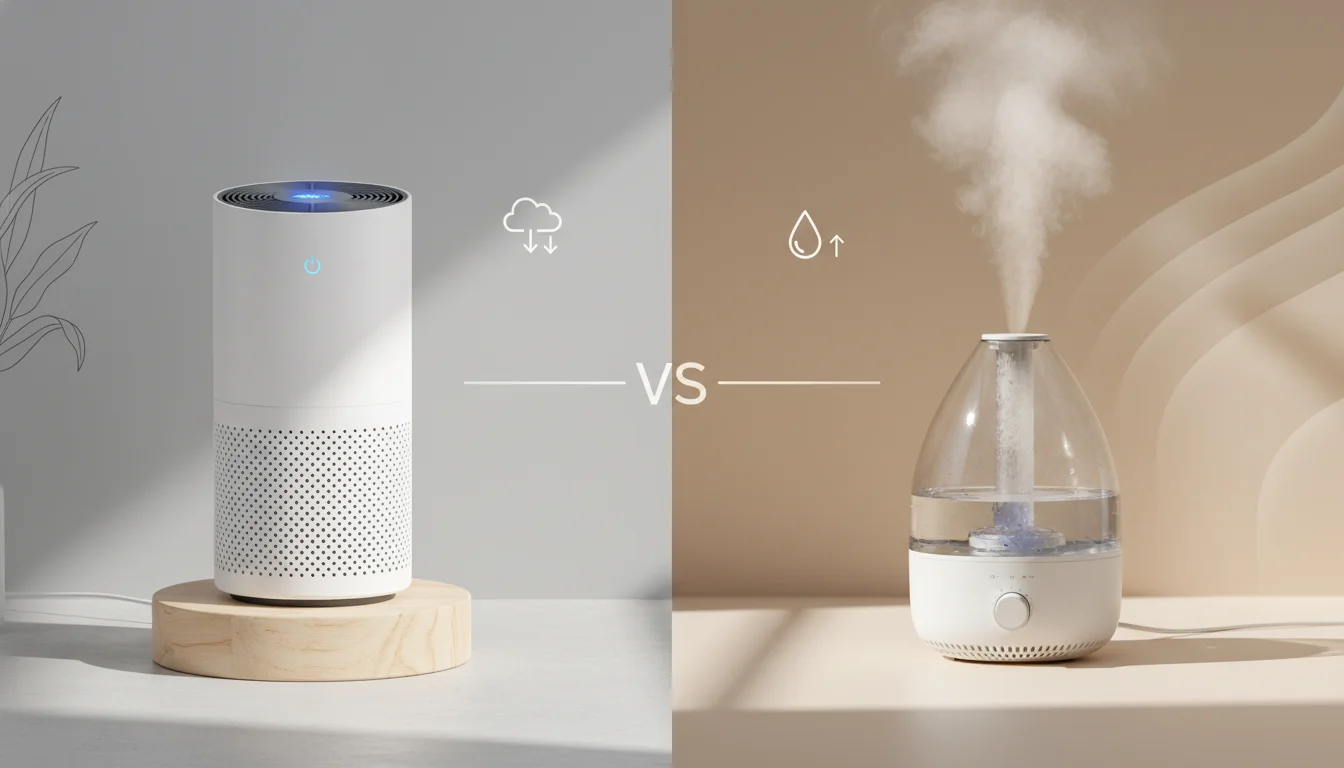
Air purifiers pull contaminated air through filters to trap particles like dust, pollen, smoke, and pet dander, then release clean air back into your space. Humidifiers release water vapor into dry rooms using evaporation, ultrasonic vibrations, or steam technology.
| Feature | Air Purifier | Humidifier |
|---|---|---|
| Primary Function | Removes airborne particles and pollutants | Adds moisture to dry air |
| Effect on Air Quality | Reduces allergens, dust, mold spores, VOCs | No impact on pollutants |
| Effect on Humidity | No impact | Raises moisture levels to 30-50% |
| Best For | Allergies, asthma, smoke, pet owners | Dry skin, sinus irritation, winter comfort |
| Maintenance | Filter replacement every 6-12 months | Regular cleaning to prevent mold |
| Health Risks if Neglected | Reduced effectiveness | Mold and bacteria growth |
Think of it this way: your air purifier works like a coffee filter, catching what you don't want. Your humidifier works like a tea kettle, adding something your air lacks. Neither does the other's job. Jaspr notes that running a humidifier without proper cleaning introduces the exact mold spores an air purifier would remove.
When to Choose an Air Purifier
Air purifiers excel at removing microscopic triggers that cause allergic reactions, asthma attacks, and respiratory irritation. They work year-round in any climate because indoor air pollution exists regardless of outdoor conditions.
Choose an air purifier if you experience:
- Sneezing, itchy eyes, or congestion that worsens indoors
- Reactions to pet dander from cats, dogs, or other animals
- Sensitivity to dust, pollen, or mold spores
- Exposure to cigarette smoke or cooking odors
- Living in urban areas or regions affected by wildfire smoke
For allergy and asthma sufferers, the choice between these devices matters significantly. Humidifiers ease dryness symptoms but do nothing for the actual allergens triggering your reactions. Molekule confirms that while humidifiers may ease nasal irritation, they cannot decrease allergen counts and sometimes worsen asthma when not properly maintained.
During the 2023 Canadian wildfire season, air purifier sales spiked 400% in affected U.S. regions. Those buyers understood something important: smoke particles between 0.1 and 1 micron penetrate deep into lungs. Only HEPA filtration catches them.
When to Choose a Humidifier
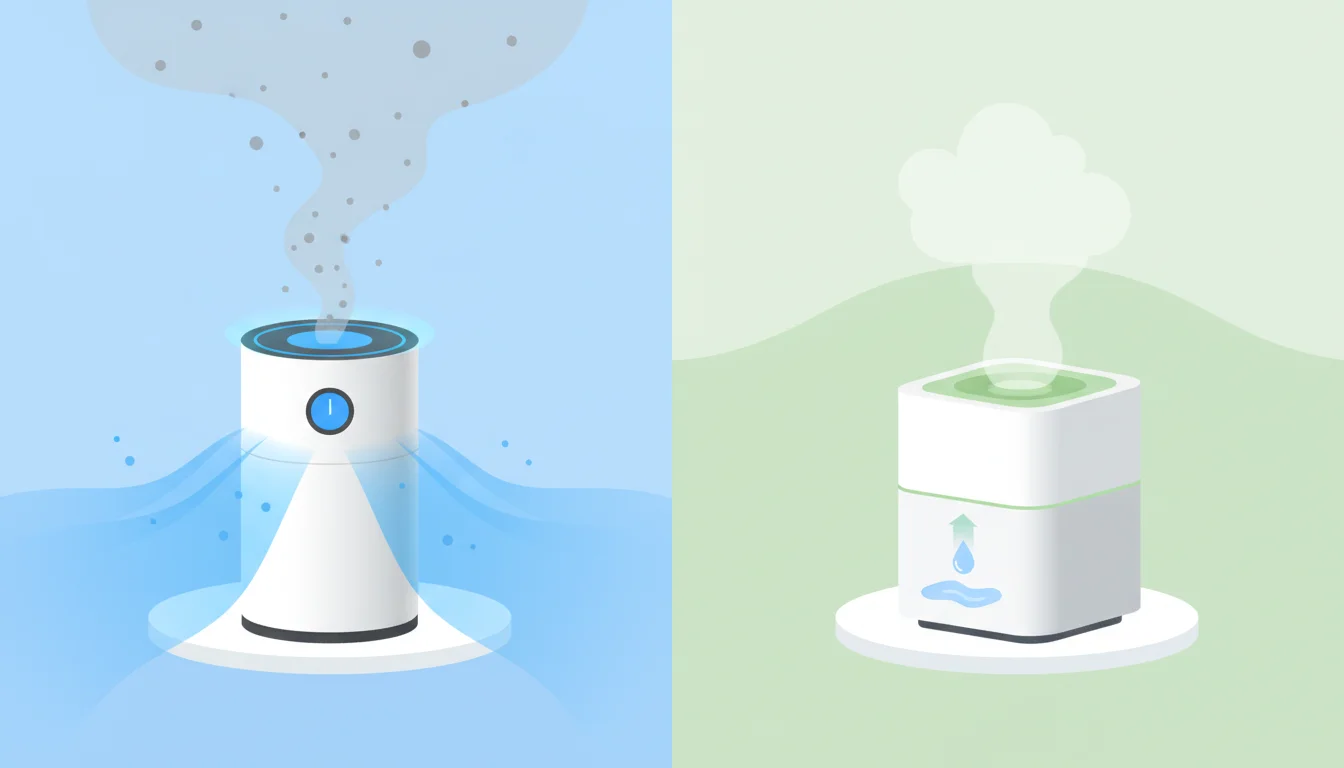
Humidifiers solve discomfort caused by air that lacks adequate moisture, typically when indoor relative humidity drops below 30%. This happens most often during winter when heating systems run constantly.
Signs you need a humidifier:
- Dry, cracking skin that moisturizer doesn't fix
- Frequent nosebleeds, especially in winter
- Waking up with a sore throat or chapped lips
- Static electricity shocking you throughout your home
- Babies or young children showing signs of respiratory discomfort
The EPA reports that 8 out of 10 homes experience problematic dryness during heating season, causing nose and throat irritation, cracked skin, and poor sleep quality. Maintaining humidity between 30-50% addresses these issues while avoiding the mold growth that occurs above 55%. [Dowd HVAC] notes that proper humidity makes rooms feel warmer by a few degrees, potentially cutting heating bills by up to 15%.
Fair warning: I learned that humidity above 50% creates its own problems. Dust mites thrive in moist environments. If you have allergies, monitoring your humidity level prevents trading one problem for another.
Can You Use Both Together? Understanding Combination Devices
Running an air purifier and humidifier simultaneously works well and addresses two distinct air quality challenges at once. The devices don't interfere with each other as long as you keep the humidifier mist directed away from the purifier's intake.
Benefits of using both:
- 34% reduction in sleep disruptions according to indoor air quality studies
- Reduced respiratory irritation from both dry air and airborne particles
- Better outcomes for allergy sufferers during dry winter months
- Improved skin health through added moisture and reduced irritant exposure
Combination units exist and save space, but I've tested several. The 2-in-1 devices typically compromise on both functions. Filter capacity shrinks to accommodate the water tank, and humidification output reduces to fit the filtration system. Separate units costing the same total price consistently outperform combos in head-to-head testing.
If budget forces a choice, pick the device that addresses your primary symptom. You can always add the second one later.
Cost Comparison: Purchase Price and Long-Term Expenses
Initial purchase price tells only part of the story. Air purifiers require ongoing filter replacements that add up over years of use.
| Cost Factor | Air Purifier | Humidifier |
|---|---|---|
| Entry-Level Price | $50-$150 | $20-$80 |
| Mid-Range Price | $150-$300 | $80-$150 |
| Premium Price | $300-$500+ | $150-$300 |
| Annual Filter/Consumable Cost | $30-$100 | $0-$30 (distilled water) |
| Monthly Energy Cost | $5-$15 | $5-$15 |
| Maintenance Time | 10 min monthly | 30 min weekly |
A $200 air purifier with $60 annual filter costs runs $500 over five years. A $100 humidifier using $10 monthly in distilled water costs $700 over the same period. The humidifier appears cheaper upfront but costs more long-term if you use distilled water consistently.
Humidifiers also demand more of your time. Weekly cleaning prevents bacterial and mold buildup in the tank and misting mechanism. Skip this maintenance, and your humidifier becomes a mold delivery system.
Quick Decision Guide: Which Device Fits Your Needs?
Your symptoms reveal which device you need. Reactions to particles mean purifier. Reactions to dryness mean humidifier.
Get an air purifier if you have:
- Seasonal or year-round allergies
- Pets that shed fur or dander
- Anyone smoking indoors
- Asthma or COPD in the household
- An urban apartment without good ventilation
Get a humidifier if you have:
- Humidity consistently below 30%
- Nosebleeds or cracked skin in winter
- Infants or young children sensitive to dry air
- Cold or flu symptoms needing relief
- Forced-air heating running frequently
Consider both if:
- You live in a dry climate with outdoor pollution
- Multiple family members have different symptoms
- Your home exceeds 1,500 square feet
- Seasonal needs shift between dry winters and allergen-heavy springs
Geographic location matters too. Phoenix residents rarely need dehumidification but frequently need air purification during dust storms. Seattle residents deal with mold spores year-round but rarely face dry air concerns.
FAQ
Do air purifiers help with congestion?
Air purifiers reduce congestion caused by allergen exposure, not congestion from illness or dryness. If pollen, dust, or pet dander triggers your stuffy nose, purification helps. If dry air causes irritation, you need humidity instead.
Will a humidifier help my allergies?
Humidifiers don't reduce allergens and sometimes make allergies worse. Dust mites thrive at humidity above 50%. If you're allergic to dust mites, adding moisture without an air purifier may increase your symptoms.
How do I know if my air is too dry?
Check for static electricity when touching metal objects, dry skin that lotions don't fix, or frequent nosebleeds. A $10 hygrometer provides exact readings. Anything below 30% relative humidity indicates your air needs moisture.
Can air purifiers remove viruses?
HEPA filters capture virus-carrying droplets, and some purifiers with UV-C or PECO technology claim additional antiviral properties. Standard HEPA filtration reduces airborne transmission but doesn't eliminate infection risk.
How often should I clean my humidifier?
Clean your humidifier tank and base weekly with white vinegar, then rinse thoroughly. Deep clean monthly by soaking components for 30 minutes. Neglecting this schedule allows mold and bacteria to grow and disperse into your air.
What size air purifier do I need?
Match the purifier's CADR rating to your room size. A 200 CADR unit handles rooms up to 300 square feet effectively. Undersized purifiers run constantly without adequately cleaning your space.
Are cool mist or warm mist humidifiers better?
Cool mist humidifiers work safely around children and pets. Warm mist models kill more bacteria during operation but pose burn risks. For large spaces, evaporative cool mist units provide the most efficient coverage.
When should I run each device?
Run air purifiers continuously for best results, as they work better with sustained operation. Run humidifiers only when humidity drops below 30-40%, typically during heating season or in arid climates.
Share this post
Related Posts
UV Air Purifier for HVAC: Complete 2025 Guide to Cleaner Indoor Air
UV Air Purifier for HVAC: Complete 2025 Guide to Cleaner Indoor Air
Air Purifier With Window Open: Does It Work? (2025 Guide)
Air Purifier With Window Open: Does It Work? (2025 Guide)
Air Purifiers for Cigarette Smoke: What Actually Works (2025 Guide)
Air Purifiers for Cigarette Smoke: What Actually Works (2025 Guide)