Water-Based Air Purifiers: How Water Filtration Technology Cleans Your Air
An air purifier using water as a filter draws contaminated air through a water basin or rotating wet discs to trap dust, pollen, and allergens. Units with dual-duct ventilation fans move up to 1,800 cubic meters of air per hour through water-soaked filtration media. This guide covers how water filtration works, compares it to HEPA technology, and helps you decide if a water purifier fits your needs.
What Is a Water-Based Air Purifier?
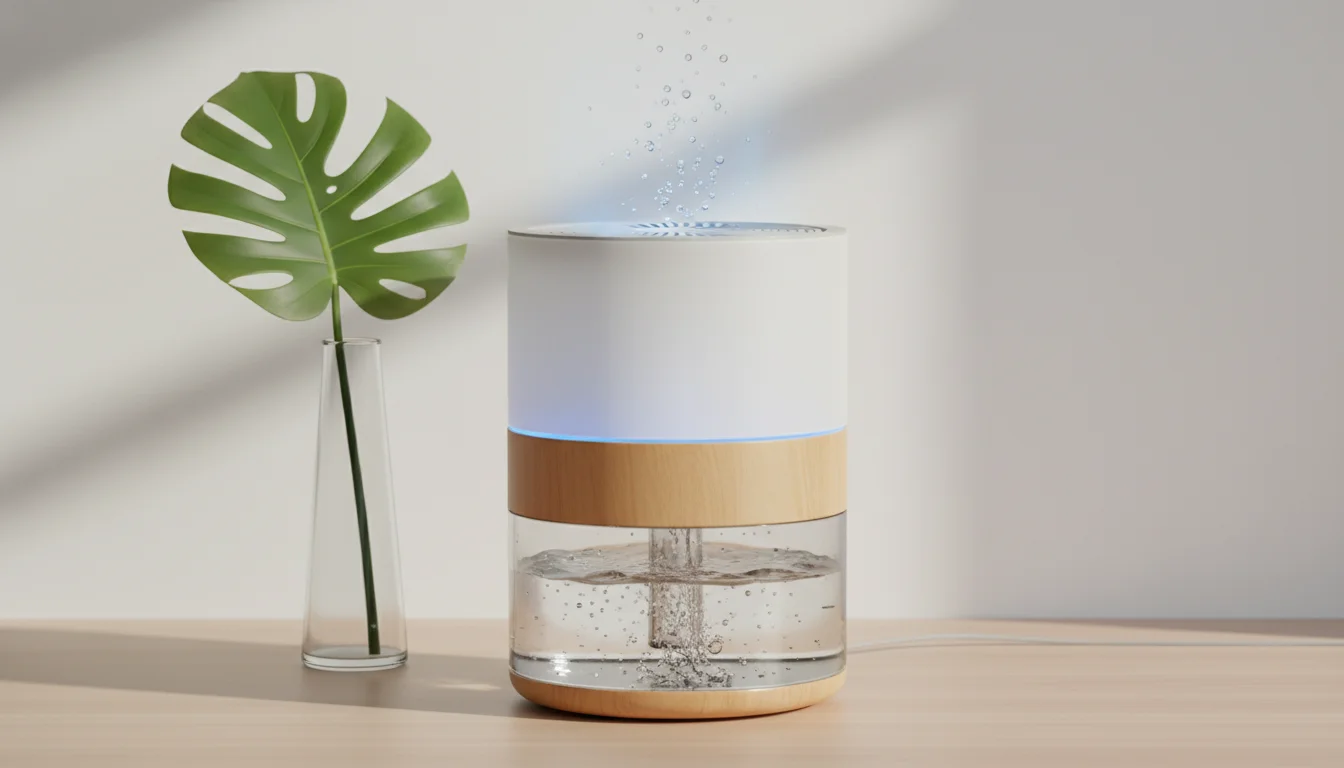
A water air purifier cleans indoor air by forcing it through a water layer where particles stick to the liquid and remain trapped. The technology pulls contaminated air downward into a basin or through rotating discs partially submerged in water. Clean, humidified air then releases back into your room.
Three main types exist on the market:
- Water Air Washers: Force air through water to mechanically trap dust and larger pollutants
- Water Air Revitalizers: Clean and humidify simultaneously, improving comfort in dry climates
- Hybrid Systems: Combine water filtration with HEPA, UV light, or activated carbon for broader pollutant coverage
The technology traces back to traditional uses of natural water for air cleaning. Modern hydro purification evolved when manufacturers added mechanical fans and impeller blades to actively mix air with water. Early prototypes used simple water-soaked sponges. Today's systems incorporate high-powered fans capable of processing 1,800 cubic meters per hour through 2.54 cm thick polyurethane media. PMC
Water-based air purifiers also double as aromatherapy diffusers when you add essential oils to the basin.
How Water Filtration Works in Air Purifiers
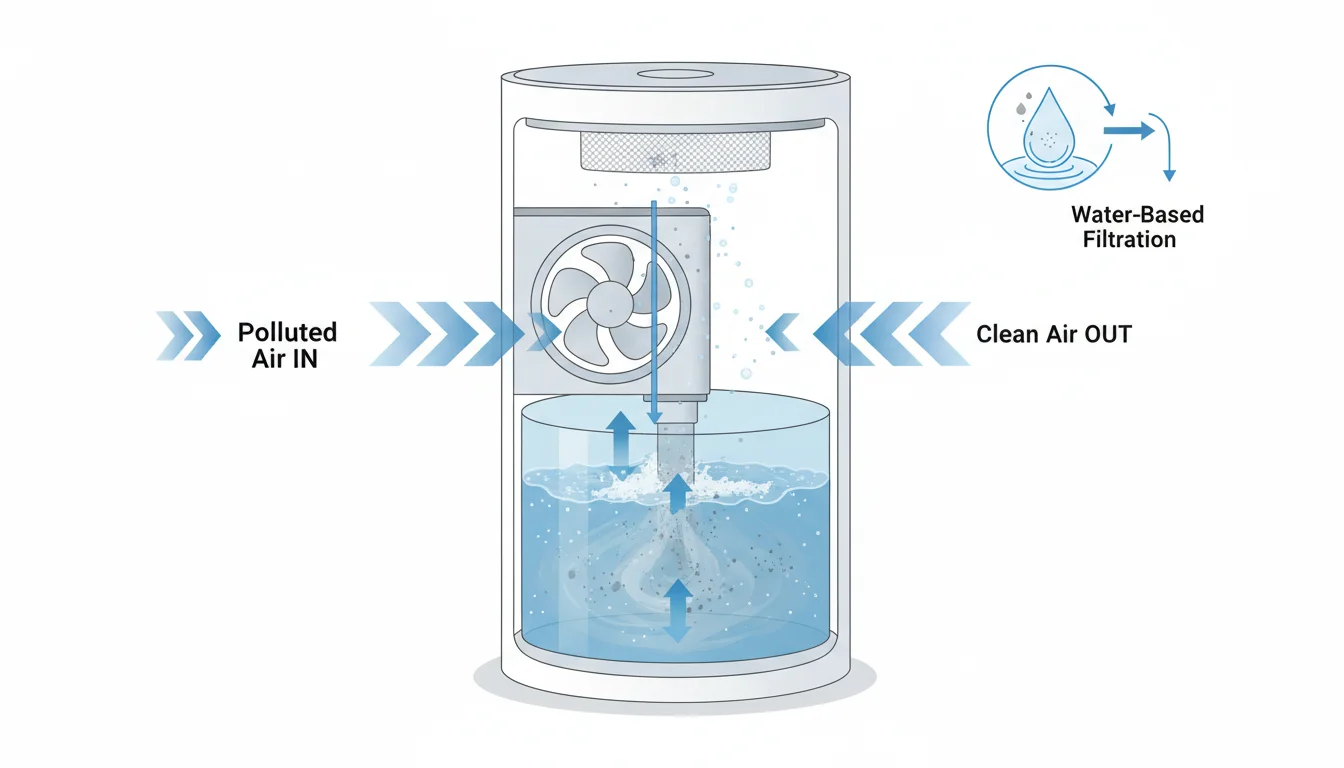
The water vortex air purification process traps particles by forcing contaminated air into contact with spinning water. A motor-driven impeller creates turbulence that maximizes the time particles spend in contact with water.
Here's the step-by-step process:
- A fan draws room air downward into the purifier housing
- Air passes through rotating discs or impeller blades submerged in water
- The spinning motion creates a vortex that increases contact between air and water molecules
- Dust, pollen, pet dander, and smoke particles bind to water droplets
- Particles sink to the bottom of the basin
- Clean, humidified air releases back into the room
Water molecules attract and bind to airborne contaminants through surface tension and adhesion. Larger particles like dust, pollen, and pet dander get captured effectively because they collide with water droplets during the turbulent mixing phase.
What water filtration captures:
- Dust and household debris
- Pollen and seasonal allergens
- Pet dander
- Smoke particles
- Some bacteria and viruses
What water filtration struggles with:
- Ultrafine particles below 1 micron
- Volatile organic compounds (VOCs)
- Chemical gases and odors
- Formaldehyde and other gaseous pollutants
The dirty water in your basin provides visual proof of captured pollutants. After a few days, you'll see exactly what was floating in your air.
Water Air Purifiers vs HEPA Filters: Key Differences
HEPA filters capture 99.97% of particles down to 0.3 microns through dense fiber media. Water purifiers rely on physical trapping in liquid, which works best for larger particles but lacks standardized efficiency ratings.
| Factor | Water Air Purifier | HEPA Air Purifier |
|---|---|---|
| Particle Capture (0.3 microns) | Variable, lower efficiency | 99.97% minimum |
| Filter Replacement Cost | $0 (uses tap water) | $30-100 every 6-12 months |
| Daily Maintenance | Water changes required | None |
| Humidity Output | Yes, adds moisture | No, some dry the air |
| Noise Level | Generally quieter | Moderate to loud |
| Energy Use | Lower on average | Higher due to dense filter resistance |
| Best For | Dust, pollen, dry climates | Allergies, asthma, fine particles |
HEPA filters deliver medical-grade filtration proven by standardized testing. Hepacart reports that true HEPA reduces PM2.5 levels by 50-60% in real-world conditions. The performance gap between water and HEPA filtration widens when targeting microscopic allergens and pathogens.
Choose HEPA if you have asthma, severe allergies, or live in a polluted urban environment. Pick water filtration if you want lower operating costs, added humidity, and primarily deal with dust and pollen.
Benefits of Using Water as an Air Filter
Zero filter replacement costs make water-based air purifiers the most economical long-term choice for basic air cleaning. Units start at $149 with no ongoing consumable expenses throughout their lifespan.
Financial benefits:
- No filter cartridge purchases ($30-100 saved annually)
- Lower energy consumption than HEPA models
- Longer device lifespan without filter degradation
Environmental benefits:
- No disposable filters entering landfills
- Reduced manufacturing waste from filter production
- Sustainable operation using tap water
Health and comfort benefits:
- Natural humidification prevents dry skin and respiratory irritation
- Chemical-free purification safe for sensitive individuals
- No off-gassing from activated carbon or ion generators
- Visual confirmation of trapped pollutants in dirty water
The eco-friendly appeal extends beyond cost savings. AirPurifiers.sg notes that eliminating disposable filters addresses growing environmental concerns about air purifier waste streams.
Fair warning: these units won't match HEPA performance for microscopic particles. But for general dust control with humidity benefits, water filtration delivers solid value.
Maintenance and Care for Water Air Purifiers
Daily water replacement prevents mold and bacteria growth inside your water-based air purifier. Stagnant water becomes a breeding ground for microorganisms within 24-48 hours, potentially releasing harmful spores into your air.
Daily tasks:
- Empty and refill the water basin
- Wipe the basin rim to prevent mineral buildup
- Check water level before each use
Weekly tasks:
- Deep clean the water basin with mild soap
- Scrub rotating discs or impeller blades
- Rinse all components thoroughly
- Dry completely before reassembling
Tap water vs distilled water:
- Tap water works fine for most users
- Distilled water prevents mineral deposits and white dust
- Hard water areas benefit from distilled or filtered water
- Tap water requires more frequent deep cleaning
Troubleshooting common issues:
- Musty odors: Change water more frequently and deep clean the basin
- Reduced airflow: Check for debris blocking intake vents
- Motor noise: Ensure the impeller spins freely without obstruction
- White dust on surfaces: Switch to distilled water
Seasonal tip: During humid summer months, run your unit less frequently to avoid over-humidifying. Winter operation provides maximum benefit when indoor air dries out from heating systems.
Top Water Air Purifier Brands and Models in 2025
Leading manufacturers have refined hydro purification technology to balance performance, noise, and tank capacity. The best water air purifiers come from established brands with proven reliability records.
Key brands to consider:
- Venta: German engineering, whisper-quiet operation, premium pricing ($300-600)
- Winix: Korean manufacturer, budget-friendly options, good room coverage ($150-300)
- Rainbow: Vacuum-based system with water filtration, versatile but expensive ($500+)
- Emerging brands: Chinese manufacturers offering competitive features at lower prices ($100-200)
Features to evaluate:
- Room coverage (square footage rating)
- Water tank capacity (larger tanks mean less frequent refills)
- Noise level in decibels (under 40 dB for bedrooms)
- Auto shut-off when water runs low
- Aromatherapy compatibility
Budget models around $150 handle rooms up to 300 square feet. Premium units from Venta cover 800+ square feet with minimal noise. User reviews consistently praise the visible proof of air cleaning when dirty water needs changing.
FAQ
Do water air purifiers work for allergies?
Water purifiers reduce larger allergens like pollen and dust but miss microscopic triggers. Allergy sufferers with severe symptoms benefit more from medical-grade HEPA filtration that captures 99.97% of particles.
How often should I change the water in my air purifier?
Change water daily for optimal performance and hygiene. Stagnant water breeds bacteria and mold within 24-48 hours. Some users change water twice daily in heavily polluted environments.
Can I add essential oils to a water air purifier?
Most water air purifiers support essential oil additions for aromatherapy benefits. Check your manufacturer's guidelines first—some units have dedicated oil trays while others allow direct basin additions.
Do water air purifiers help with smoke?
Water filtration captures larger smoke particles but struggles with the gases and ultrafine particulates in smoke. For wildfire smoke or tobacco odors, HEPA filters with activated carbon perform better.
Are water air purifiers loud?
Water purifiers typically run quieter than HEPA models because air passes through liquid rather than dense filter media. Most units operate below 40 decibels on low settings, making them suitable for bedrooms.
Will a water air purifier make my room too humid?
In already humid climates, water purifiers can add unwanted moisture. Monitor your indoor humidity and reduce runtime if levels exceed 50-60%. Dry climates benefit most from the natural humidification feature.
How long do water air purifiers last?
With proper maintenance, quality water air purifiers last 5-10 years. The absence of filter degradation means consistent performance throughout the lifespan. Motor quality determines longevity more than any other factor.
Share this post
Related Posts
UV Air Purifier for HVAC: Complete 2025 Guide to Cleaner Indoor Air
UV Air Purifier for HVAC: Complete 2025 Guide to Cleaner Indoor Air
Air Purifier With Window Open: Does It Work? (2025 Guide)
Air Purifier With Window Open: Does It Work? (2025 Guide)
Air Purifiers for Cigarette Smoke: What Actually Works (2025 Guide)
Air Purifiers for Cigarette Smoke: What Actually Works (2025 Guide)