Air Purifier on Floor or Table: The Complete 2025 Placement Guide
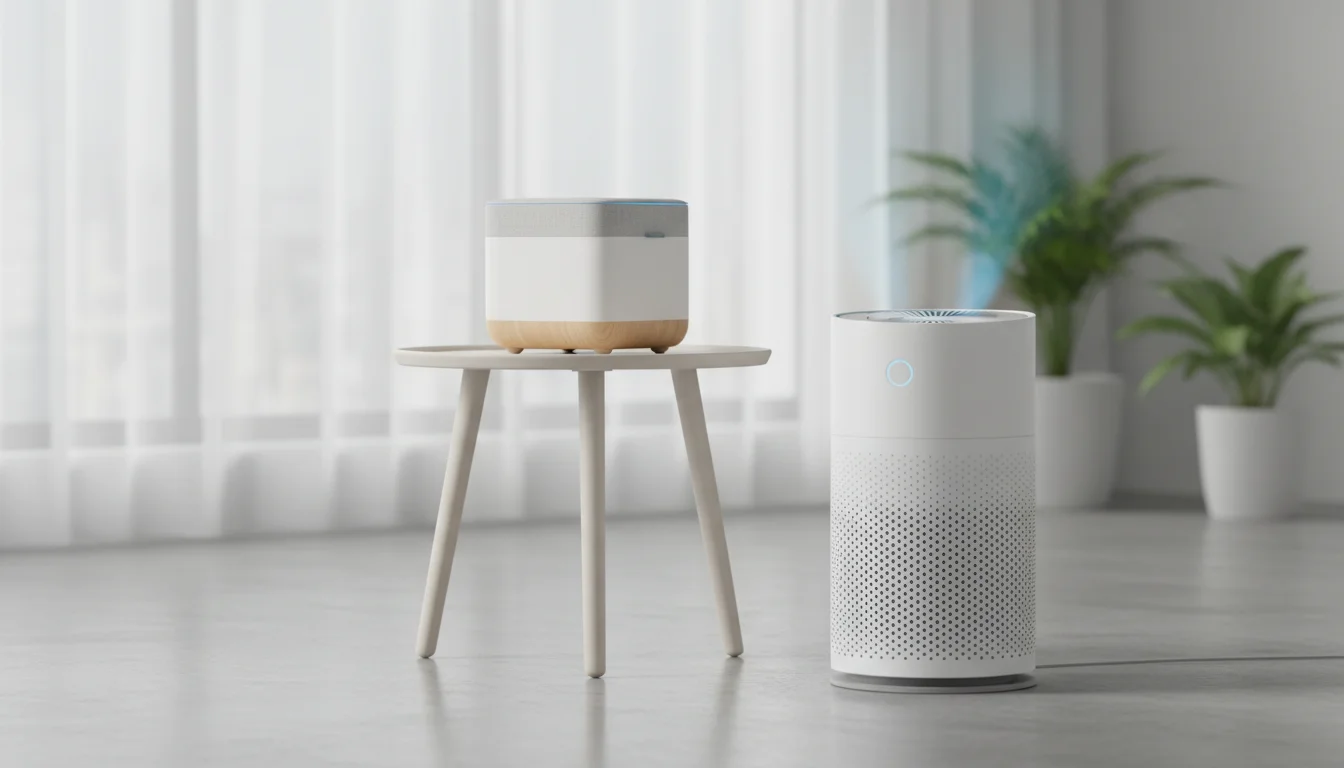
Where you position your air purifier affects its pollutant reduction efficiency by 20-30%. The air purifier on floor or table decision depends on what you're filtering, your room layout, and your device's intake design. This guide breaks down science-backed placement strategies for every room in your home.
Understanding How Air Purifier Placement Affects Performance
Air circulation patterns determine how effectively pollutants reach your filter. Heavier particles like dust and pet dander settle within minutes of becoming airborne, while lighter pollutants like smoke and VOCs remain suspended at breathing height for hours.
| Pollutant Type | Typical Behavior | Best Purifier Height |
|---|---|---|
| Dust and pet hair | Settles to floor level within 2-5 minutes | Floor placement |
| Pet dander | Settles slowly, accumulates low | Floor to 2 feet |
| Smoke and cooking odors | Stays suspended at 3-5 feet | Table or elevated |
| VOCs from furniture | Concentrates at breathing height | 3-5 feet elevation |
| Pollen | Medium weight, settles gradually | Floor or low table |
Your purifier's CADR rating assumes optimal positioning. Place it poorly, and you're leaving 30% of that rating on the table. I learned this the hard way after wondering why my allergies persisted despite running a quality unit around the clock. Moving it six inches from the wall made a noticeable difference within days.
When to Place Your Air Purifier on the Floor
Floor positioning targets particles that gravity pulls downward. Dust, pet hair, and larger allergens accumulate at ground level, making floor placement the logical choice for these pollutants.
Best scenarios for floor placement:
- Tower-style purifiers with bottom intake vents designed to draw air from low levels
- Bedrooms where you want to capture allergens near sleeping height
- Homes with pets that shed fur and dander
- Rooms with ceiling fans pushing air downward
- Spaces with hard flooring where dust settles quickly
Floor placement requirements:
- Maintain 4-6 inches minimum clearance from walls
- Keep 12 inches of space for optimal airflow
- Use a flat, stable surface when placing on carpet
- Position away from foot traffic to prevent tripping
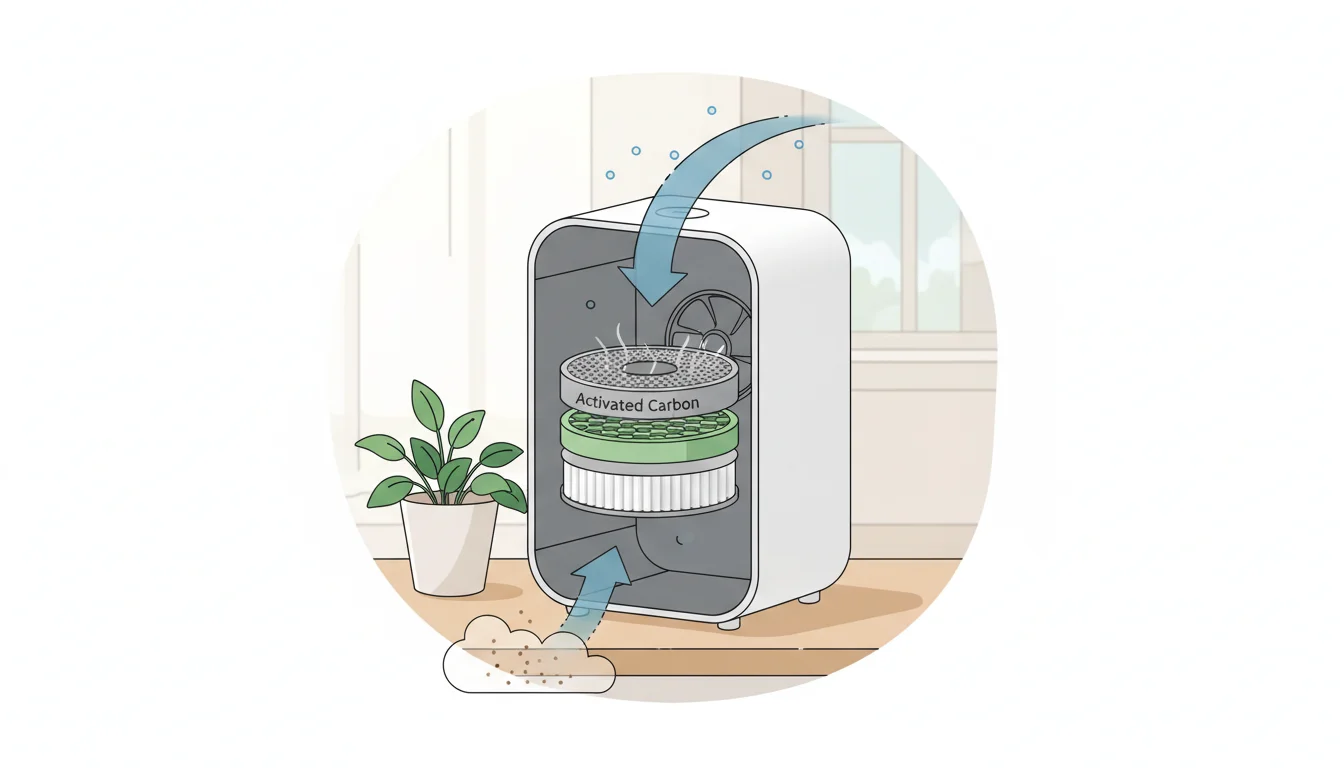
One thing worth knowing: floor-placed purifiers clog faster. All that settled dust goes straight into the filter, so check yours monthly instead of quarterly. Intellipure notes that floor placement captures heavier particles effectively but requires more frequent maintenance.
When Elevated Table Placement Works Best
Elevated positioning captures pollutants suspended at breathing height. Smoke, cooking odors, and VOCs concentrate between 3-5 feet off the ground—exactly where your nose and lungs operate.
Table placement advantages:
- Targets breathing zone pollutants where they matter most
- Reduces noise perception since sound travels farther before reaching your ears
- Makes filter changes easier with no bending required
- Works better for compact 360-degree intake designs
- Improves circulation in rooms with poor floor-level airflow
Ideal elevation scenarios:
- Cooking areas where smoke and grease particles rise
- Home offices where you sit at breathing height for hours
- Rooms with wall-to-wall carpet that traps floor-level air
- Spaces where rugs or furniture block floor airflow
[Sleep and Sinus Centers] recommends 3-5 feet of elevation for allergy sufferers. This height intercepts allergens before they reach your respiratory system. Fair warning: make sure your table is stable. A toppled purifier is an expensive lesson.
Room-by-Room Placement Recommendations
Different rooms have different pollution profiles. Your kitchen generates smoke and grease. Your bedroom collects dust mites. Your office concentrates CO2 and VOCs from electronics.
| Room | Recommended Placement | Height | Key Considerations |
|---|---|---|---|
| Bedroom | Floor, near bed | Ground level | Keep 6 feet from your head, target allergens during sleep |
| Living room | Side table | 2-3 feet | Central positioning for whole-room coverage |
| Home office | Desk level | 3-4 feet | Target breathing zone during work hours |
| Kitchen | Counter or elevated | 3-5 feet | Capture rising smoke and cooking odors |
| Nursery | Floor, away from crib | Ground level | Enable child-lock, avoid direct airflow on baby |
| Basement | Floor | Ground level | Target musty odors and mold spores settling low |
Position purifiers near pollution sources but not blocking doorways. I made the mistake of putting mine right by the kitchen entrance—great for catching cooking smoke, terrible for everyone tripping over it at dinner time.
Clearance and Spacing Requirements for Maximum Efficiency
Restricted airflow kills purifier performance. Your unit needs breathing room on all sides to pull in contaminated air and push out clean air effectively.
Minimum clearance requirements:
- 4 inches from walls as an absolute minimum
- 12 inches from walls for optimal performance
- 3-6 feet from room corners to avoid dead zones
- 2 feet from large furniture pieces
- Away from curtains or drapes that block intake
Locations to avoid:
- Behind furniture where air stagnates
- Near open windows that introduce outside air
- Close to HVAC vents that disrupt circulation patterns
- Against heat sources like radiators or fireplaces
- In tight corners where air cannot circulate
[Air Oasis] emphasizes that central room placement provides the best coverage. This isn't always practical with furniture, but aim for the most open position possible. Check your manufacturer specifications—intake and outlet positions vary significantly between models.
Common Placement Mistakes to Avoid
Bad placement wastes electricity and leaves pollutants circulating. These errors can reduce your purifier's effectiveness by 50% or more.
Critical mistakes:
- Hiding the purifier behind furniture, which blocks intake completely
- Placing on thick carpet without a flat base, restricting bottom-intake units
- Using unstable surfaces that create tipping hazards
- Running in sealed rooms without fresh air exchange
- Ignoring manufacturer height and orientation guidelines
- Positioning in corners where air stagnates
Quick fixes:
- Pull the unit at least one foot from any wall or furniture
- Add a flat board under units placed on carpet
- Crack a window periodically for fresh air exchange
- Read your manual for model-specific intake locations
Trust me on this one: I spent three months wondering why my purifier seemed ineffective. It was wedged between a bookshelf and the wall. Moving it two feet forward transformed the air quality in that room.
FAQ
Does room size affect whether I should use floor or table placement?
Room size matters less than ceiling height and air circulation patterns. In rooms under 200 square feet, placement height makes minimal difference. Larger rooms benefit from elevated placement to extend the clean air radius.
Should I move my air purifier between rooms or buy multiple units?
Stationary placement works better than moving units around. Each relocation means the purifier starts fresh in a polluted room. Multiple units sized for each room deliver consistent results.
How does humidity affect air purifier placement decisions?
High humidity makes particles heavier, causing them to settle faster. In humid climates, floor placement becomes more effective. Dry environments keep particles suspended longer, favoring elevated positioning.
Can I place my air purifier near plants?
Keep purifiers 3-4 feet from houseplants. Plants release pollen and can shed debris that clogs filters quickly. The airflow from purifiers also dries out plant soil faster than normal.
What about placing an air purifier in a hallway to cover multiple rooms?
Hallway placement is ineffective. Purifiers work best in enclosed spaces where they can recirculate the same air multiple times. Open hallways allow polluted air to escape before filtration.
Does the type of flooring change placement recommendations?
Hard floors allow dust to settle and resuspend easily, making floor placement effective. Thick carpet traps particles below the purifier's intake level. On carpet, elevate your unit 6-12 inches minimum.
How do I know if my current placement is working?
Monitor allergy symptoms and visible dust accumulation. Some purifiers include air quality sensors. If symptoms persist after two weeks of continuous operation, experiment with different positions and heights.
Share this post
Related Posts
UV Air Purifier for HVAC: Complete 2025 Guide to Cleaner Indoor Air
UV Air Purifier for HVAC: Complete 2025 Guide to Cleaner Indoor Air
Air Purifier With Window Open: Does It Work? (2025 Guide)
Air Purifier With Window Open: Does It Work? (2025 Guide)
Air Purifiers for Cigarette Smoke: What Actually Works (2025 Guide)
Air Purifiers for Cigarette Smoke: What Actually Works (2025 Guide)